 ENERGY CHARGE
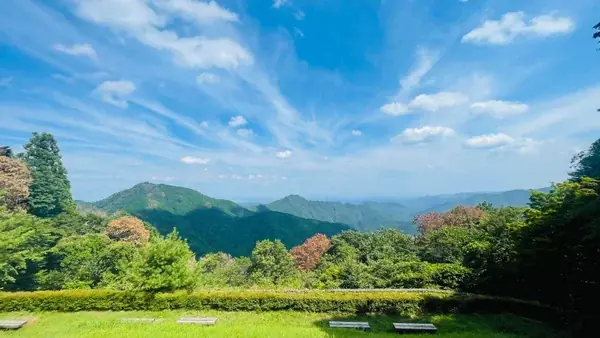
Shinrin-yoku (森林浴), literally "forest bathing," was coined by Japan's Ministry of Agriculture and Forestry in 1982 as a public health practice — not a walk, not a hike, but a slow, sensory immersion in forest air. It's one of the more misunderstood Japanese wellness exports abroad, often flattened into "go for a nice walk in the woods." The real practice is more specific than that, and easy to learn even on your first try.
What it actually is
Shinrin-yoku has no destination and no pace to keep, which is the single biggest adjustment for anyone used to hiking for distance or a summit. You move slowly (or not at all), breathe deliberately, and pay attention to what's around you — the smell of cedar, the sound of water, the texture of bark. It's closer to meditation than exercise, and it's normal to cover less than a kilometer in an hour.
The research behind it
Forest bathing has been studied seriously in Japan for over two decades, most visibly through the work of Dr. Qing Li at Nippon Medical School, along with researchers at Chiba University's Center for Environment, Health and Field Sciences. Published studies have measured real physiological effects after forest bathing sessions: lower cortisol (stress hormone) levels, reduced blood pressure and heart rate, and measurably increased activity of natural killer cells in the immune system, with effects in some studies persisting for days afterward. Researchers attribute part of the effect to phytoncides — airborne antimicrobial compounds that trees, especially conifers like the cedar and cypress common in Japanese forests, release into the air.
Where to practice it near Tokyo
- Okutama's cedar groves — dense, quiet, and less trafficked than Takao on weekdays; the JR Ome Line gets you to several trailheads directly
- Mount Takao's Trail 4 — a quieter loop through old-growth forest, away from the main summit route, good if you only have a few hours
- Meiji Jingu forest — if you can't leave the city, this dense, human-planted forest inside central Tokyo still delivers a genuine sensory reset within a 10-minute walk of Harajuku Station
- Hakone's forest trails — further out, but combinable with an onsen afterward for a full reset day
How to do it yourself
Leave the phone in your bag, or at least on silent and out of sight. Walk at roughly half your normal pace — slower than feels natural at first. Stop every few minutes and just breathe: four seconds in, six seconds out, a longer exhale than inhale to actively engage the parasympathetic nervous system. Notice one thing with each sense — a smell, a sound, a texture — rather than taking in the whole scene at once. There's no wrong way to do this; the only real failure mode is rushing it or turning it into exercise.
A simple 20-minute version
If you only have a short window: find any tree cover, even a city park. Stand still for two minutes with your eyes closed, just listening. Walk slowly for ten minutes, stopping whenever something catches your attention. Sit for the final eight minutes with your back against a tree if one's available. It's a smaller dose of the same effect, and a good way to test whether the practice suits you before committing to a full guided session.
Guided sessions
Energy Charge builds guided shinrin-yoku and mindful breathwork into every retreat trail, led by Nobuko, who has practiced and guided forest bathing sessions on these specific Tokyo-area trails for years. If you want the full experience with someone setting the pace and pointing out what to notice, it's built into every hike, not sold as a separate add-on.